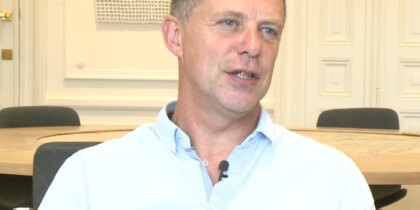
“Genomic sequencing will advance research and make a significant contribution to patient care” by Prof.. Bart Loeys
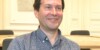
1. Could you please introduce yourself?
I’m Bart Loeys. I’m a clinical geneticist at the Centre for Medical Genetics at the University of Antwerp. I have been involved in research into Marfan syndrome and related diseases for many years.
2. Can you explain the 101 Marfan Genomes Project?
Marfan syndrome has been known for a long time. In the 90s, researchers discovered that the gene underlying this syndrome is the one coding for the Fibrillin 1 protein. We’re pretty good today at identifying the genetic variations that cause Marfan syndrome in this group of patients, but we can’t predict which patients are at risk of developing aortic aneurysms and dissections. And I believe that a better study and genetic categorization of these patients will enable us to better answer this question.
3. Why did you agree to join the Scientific Committee of the 101Genomes Marfan Project?
When Romain Alderweireldt contacted me, I was immediately eager to take part in this project because I think it’s important that we all work together as an international community and involve patients. It gives us a huge boost to see all the energy Romain and the members of the 101G Foundation have put into this project. And of course, as a researcher, I also want to contribute to the scientific part of this project.
4. As a scientist, what do you expect from the 101 Marfan Genomes Project?
I hope that the main outcome of this project will be the identification of a modifier gene. The modifier genes should enable us to better predict which Marfan patients are at risk of developing certain complications of the disease. For example, if we can identify the modifiers that determine which patients will or will not develop aortic aneurysms, this will enable us in the long term to develop better care for these patients.
5. What is the key element for you that makes the 101 Marfan Genomes Project important for Marfan patients? And for other rare diseases?
I think the key to this project is the collaboration of different international and national groups, but also that we bring together all existing technologies. We now have the ability to sequence the entire genome, which was not possible until a few years ago. Genomic sequencing will advance research and make a major contribution to patient care. I believe that if we can bring this project to a successful conclusion for Marfan syndrome, then it can also serve as a model for future research into other rare diseases.
Professor Bart Loeys, M.D. PhD
Cardiogenetics, Center for Medical Genetics, University of Antwerp and Antwerp University Hospital, Antwerp, Belgium
Department of Human Genetics, Radboud University Nijmegen Medical Center, Nijmegen, The Netherlands
[embedyt] https://www.youtube.com/watch?v=R8KoA33PzH4[/embedyt]
[embedyt] https://www.youtube.com/watch?v=dorafocx9OI[/embedyt]